
The foundation of government is land, around which is wrapped the economy, legal system and elections. Land in New Zealand has a legal title, an address and a set area recorded by a surveyor known as a parcel. I believe there is some confusion here and it’s important to be clear when so much depends on land. Parcels and Legal Titles do not have addresses.

Addresses are made up for convenience to provide a logical on the ground location for a property. They do not show up in the survey system at all. Sometimes addresses get changed to keep numbering sequential. For a long time the New Zealand’s addresses were maintained purely to facilitate voting. Addresses are how people refer to land because no one wants to say “I’m going around the corning to PAR_ID 5481547”. In addition to Address, Title and Parcels; Dwellings, Owners and Property ID are also used to refer to land. Too keep the country running along smoothly these records are kept meticulously and complex associations are built between them. One title may refer to one or more parcels. One address may refer to many titles and many parcels. Many systems are involved in keeping this data linked and GIS is the ideal tool for visualizing the outputs.
As of today there are:
- 1,940,643 Addresses
- 2,531,793 Parcels
- 2,195,225 Titles
In addition there are approximately:
- 1.74 Million Dwellings
- 5.04 Million Owners
- ∞ number of Property id’s used by various organisations to manage addresses


The History of Land
In pre-1840 in New Zealand ownership of an area of land was passed along through a deed document. This document included surveyors drawings, and a description of the land, including features like hedgerows or pegged areas. Purchasing a deed put the responsibility on the purchaser to verify that the person selling the land had the legal right to do so. To ensure a legitimate sale the buyer had to search every record to make sure the the current owner had obtained the land legally. This caused a lot of problems. In 1840 the current system was introduced in which a Land Information New Zealand (LINZ) verifies that previous ownership is legitimate and thus the sale is insured by the state.
Historically parcels registered as Maori land did not get paid for parcel boundary changes when infrastructure was built so they insisted on precision surveys. This has left Rotorua and the Bay of Plenty with a much higher rural parcel precision dataset than the rest of the country. While Auckland is the complete opposite because their original boundaries were typically not surveyed at all but were actually just hedges.
Computers were not big enough to hold the records
New Zealand has 12 land districts and test where used as a file prefix when records were first moved to a digital format to keep the file size down. While we no longer keep records on separate physical disks the database numbering prefix has remained. Without the prefix PARID’s would not be unique due to the original records auto incrementing.
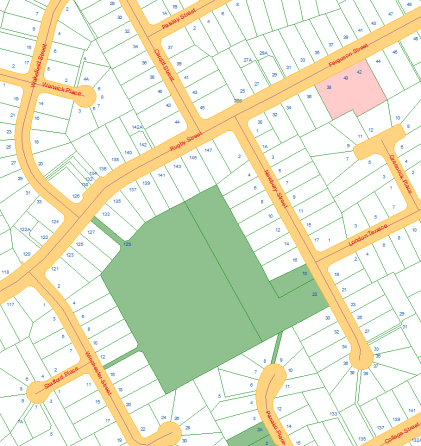
What is a Legal Land Title?
Until 2002 LINZ began issuing a document called a certificate of title, usually referred to a deposited plan, which is now held electronically. It contains information on:
- Ownership
- Appellation – the legal description
- Rights and restrictions
- Covenants – a special responsibility associated with ownership
- Easement – a right of access to land for a specified purpose such as pipe access
- Mortgage holder
And it can refer to more than one parcel of land. A title was originally supposed to be an identification key, used to ID a parcel but this link was broken by the Justice department. A unique number is now used by LINZ . A legitimate legal title reads something like this “LOT 1 DP 50683”
What is a Parcel?
A parcel is an area of land, spatially represented with attribute data. Their attributes refer to the legal title or titles to which they relate. There are two types of parcels
- Primary – the base level jigsaw pieces to New Zealand as LINZ describe it
- Non-primary – the overlays of the country such as easements, covenants, leases and movable marginal strips like public foreshore or river parcels etc…
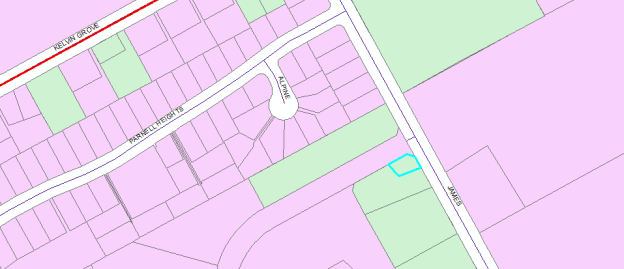
The accuracy of the parcel dataset varies. The more value in the land, generally the more accurate the boundary.
Holding the records
Land records are held by Land Information New Zealand who have complex job of maintaining perfect records across the country of address, Title and Parcel. This is hard enough without the country moving every now and then. As well as taking responsibility for updating records LINZ adjust the location of the land as earthquakes and continental drift take place.

Another recent interesting addition to the LINZ numbering system is the Water Road. This allows for the sequential numbering of properties around the outside of an island or peninsula where there is no road. Access to these properties is by water way, hence the official water road.
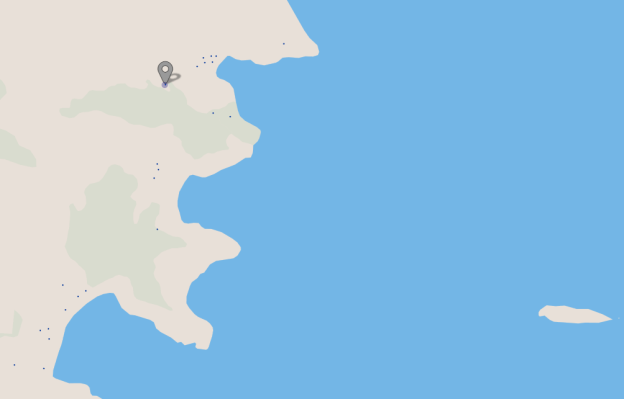
LINZ hold the definitive list of addresses
Addresses are created by councils, primarily for councils, as the primary reference for land valuations. Councils pass new addresses to LINZ who hold the national archive. Typically once a month councils reset their addressing database to the LINZ data, making sure their addresses have been integrated. This is one of the major changes that came out of the Christchurch earthquake. During the recovery responders’ found that multiple organisations had addresses associated with different areas, making it near impossible to find the right location in an emergency. Now LINZ hold the definitive list and councils send their updates to LINZ and validate that the changes have been accepted into the national database. It works in a somewhat similar manner to a Git repository, with changes being submitted, approved on the central repo and hard resets being applied across the countries organisations using addresses.
LandOnline vs LINZ Data Portal
LINZ provide access to the data they hold in two primary ways, they work with Koordinates to maintain the LINZ data portal which gives free access to addresses, titles and parcels. They also run a paid for service which gives access to ‘cadastre’, the official record of land boundary surveys. In the past LINZ was separated into two organisations, LINZ which is a government department and Terralink, which was a state owned enterprise. Terralink was theoretically responsible for the for profit data. This is still represented in much of the countries data but Terralink has now been reabsorbed into LINZ.


LINZ Milestones History:
- 1987 Reorganisation of Lands and Survey
- 1989 Purchase Geovision GIS
- 1990 DCDB data capture begins
- 1995 LandOnline opens
- 1999 Coordinate upgrade NZGD2000
- 2001 Bulk Data Extract
- 2015 LINZ Data Service (online)
Load LINZ data into Council
Since the Christchurch earthquakes LINZ have held the definitive list of all addresses, parcels and titles in the county. Councils manage the land parcels as their primary business. So in reality the local authority has the definitive list of parcels and addresses in its area. The councils manage all of the changes to land such as new developments, subdivisions, new roads etc and send those changes onto LINZ in a number of ways. To make sure that council records match LINZ we download and reset all of our records to the LINZ version once a month. A series of process are then run to re-connect all of our databases to the LINZ version of the data.
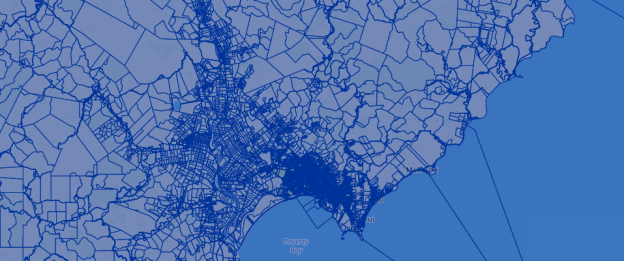
GIS contractors are typically used to help make these connections as the total LDS is very large at 56 Gigabytes.
Much of my understanding of the addressing landscape has come from the generosity of Kim Oliver who spent many days helping me to comprehend the subject. Thank you!
Please don’t hesitate to comment if you feel I’ve made a mistake in my overview. I’ve deliberately not covered the AIMS database because I don’t have a complete understanding myself. If you do please let me know and I can make additions to the post. Thanks.
 Anything Mapping
Leave a comment